In an increasingly production-driven landscape focused on automation, process optimization, and maximum operational safety, material handling has become a strategic factor in ensuring efficiency and continuity throughout the entire supply chain.
This is especially true for highly regulated and competitive sectors such as food and pharmaceuticals, where reliability and precision are no longer simple competitive advantages, but essential requirements. It is within this context that the solutions developed by BADA Material Handling stand out.
The company specializes in designing and manufacturing industrial handling systems created to help businesses achieve smoother, safer, and more efficient production processes. An increasingly important aspect of modern industry is the ability of companies to make their production facilities not only efficient, but also flexible and ready to adapt to changing market demands.
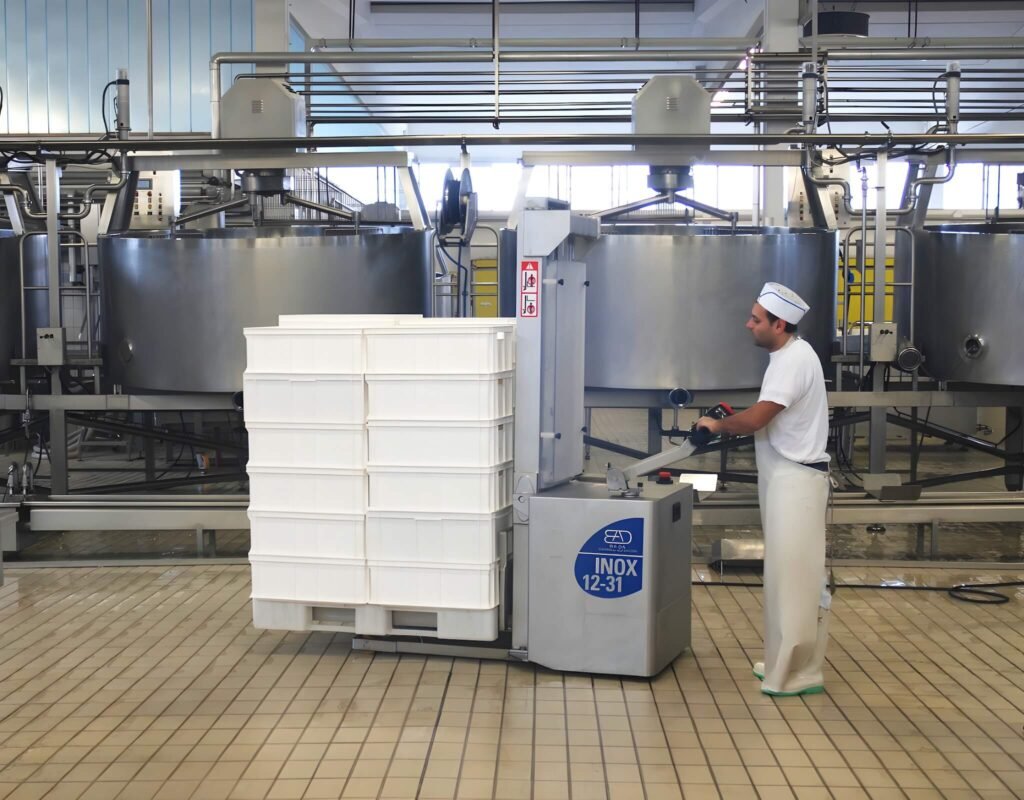
In this scenario, the solutions offered by BADA Material Handling play a key role, allowing manufacturers to improve the internal organization of production flows without compromising operational simplicity.
The ability to integrate reliable systems into existing production lines makes it possible to optimize overall plant performance, supporting more dynamic process management while contributing to increasingly sustainable, quality-driven, and continuity-oriented production models.
From raw material management to supporting packaging lines, BADA products are designed to integrate seamlessly into production environments where speed, ergonomics, and operational continuity are critical factors.
The objective is not simply to move materials, but to optimize production flow by reducing downtime, minimizing manual intervention, and eliminating inefficiencies.
In the food industry, where speed and organization directly impact responsiveness to market demand, reliable handling systems improve internal process management while maintaining high productivity standards.
In the pharmaceutical sector, where control, precision, and safety are fundamental priorities, having robust solutions designed to operate in highly sensitive environments represents significant added value.
BADA’s philosophy is built around a clear principle: developing technologies capable of adapting to the specific needs of each production facility while providing companies with tools that improve daily efficiency without adding unnecessary complexity.
In a market where innovation also means simplification, investing in advanced material handling systems is no longer an optional choice, but a fundamental component of industrial competitiveness.
This is exactly where BADA continues to stand out: transforming material handling into a driver of growth.