Manual format changeover is a widespread operational challenge in industrial automation. This approach leads to structural inefficiencies, prolonged downtime, and quality variability resulting from human intervention, translating into significant costs for the end user. Mini Motor’s FC Series was developed to eliminate these variables, simplifying integration for the designer and providing a measurable increase in productivity.
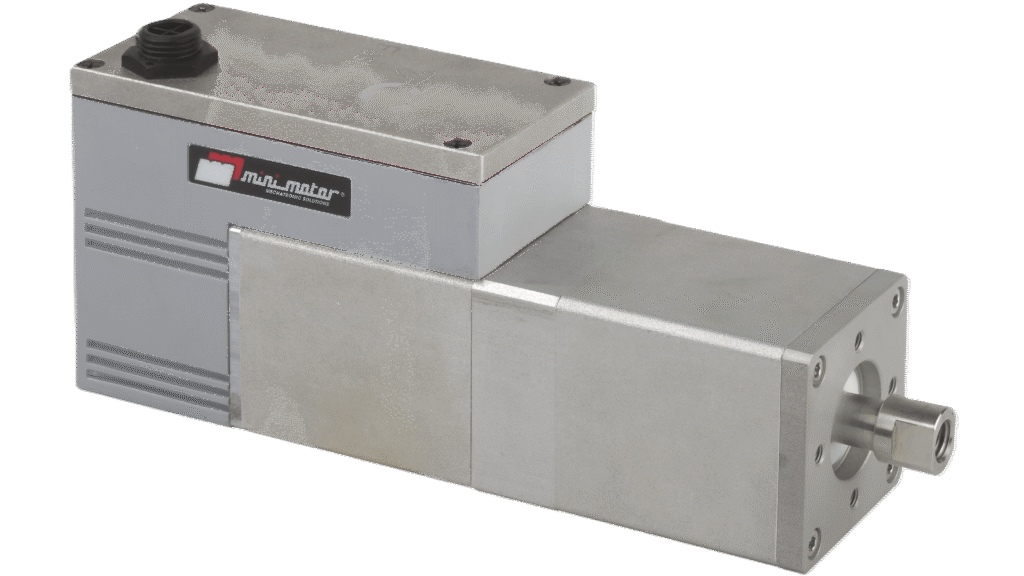
Automation and Performance Benefits
The transition from mechanical adjustment via handwheels to automation based on brushless technology offers three immediate technical benefits:
1. Reduced setup times: the synchronized repositioning of all axes occurs in fractions of a second via centralized PLC control.
2. Repeatability and precision: electronic control eliminates manual approximation, ensuring consistent millimeter-level precision in every format change cycle.
3. Application versatility: dynamic management of conveyor belts, side rails, and guides allows adaptation to new production layouts without invasive mechanical modifications.
In addition to the development of new systems, the FC line is designed as an optimal solution for retrofitting existing machinery, enabling the technological upgrade of already installed assets.
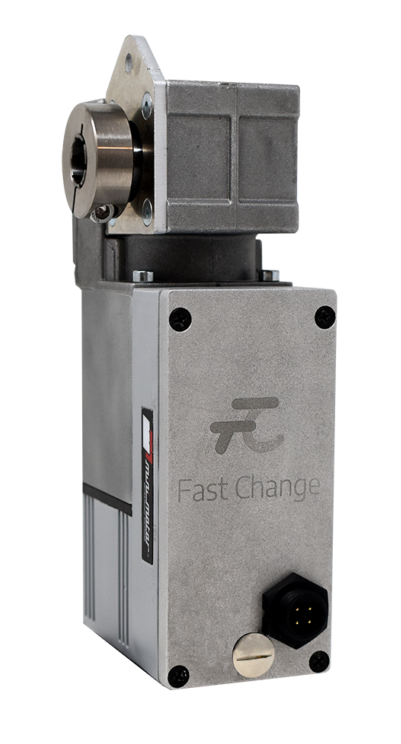
Rotary, linear kinematics, and dynamic control
The Mini Motor range meets specific handling requirements through differentiated architectures:
● FC Series (Rotary): specifically designed for driving positioning screws, with torque ranges between 3 and 20 Nm.
● FCL Series (Linear): actuator designed for direct thrusts up to 200 N, ideal for the automated movement of containment sides.
Dynamic behavior is controlled via dedicated function blocks. The operator can define specific acceleration ramps and gains, ensuring smooth movements even with high inertial loads. This software management is crucial for mitigating mechanical stress, eliminating vibrations, and preserving the integrity of the transmission components.
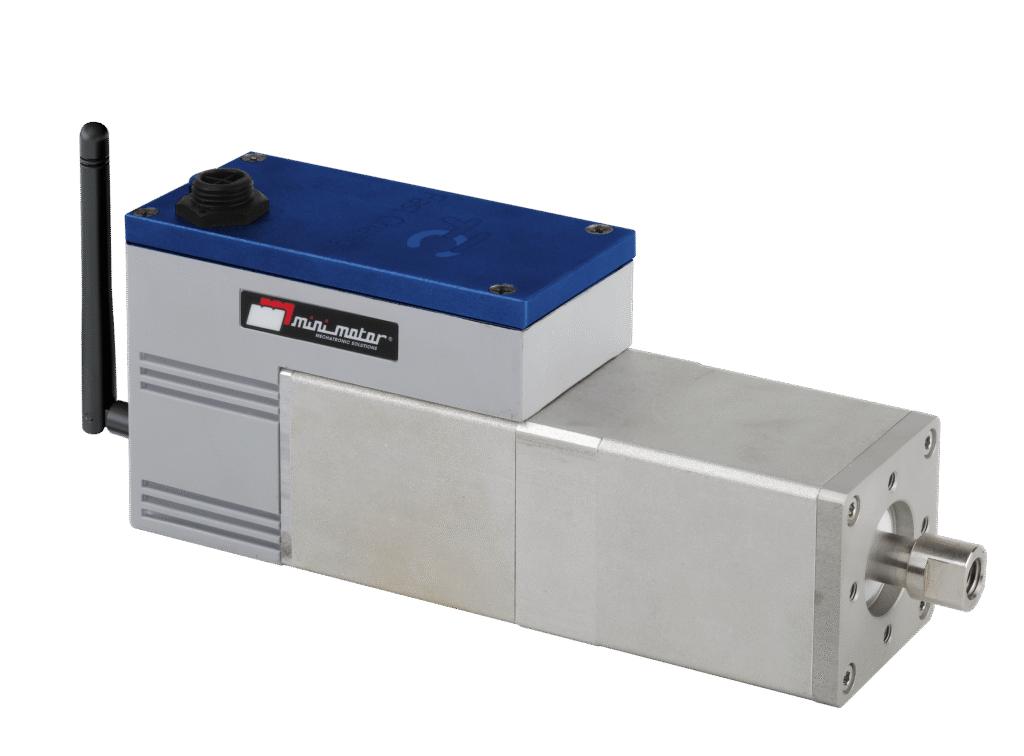
The FC series also integrates CoA 2.0 technology. This proprietary wireless protocol enables fieldbus communication without physical cabling, reducing network architecture complexity and installation costs.
Wireless format changeover with wireless integration: CoA 2.0 (Can Over Air)
For applications requiring maximum layout flexibility, the FC series is available with proprietary CoA 2.0 wireless technology.
This protocol operates on a 2.4 GHz radio network and relies on a Coordinator that acts as an interface between the PLC and the motor network. The elimination of physical fieldbus cabling allows for the redesign of production line architecture without the constraints imposed by communication cables.
The system ensures low-latency real-time communication, comparable to the performance of wired systems, and drastically simplifies installation and maintenance.
MINI MOTOR WILL BE ATTENDING SPS 2026 IN PARMA, ITALY, FROM 26TH TO 28TH MAY, BOOTH I006 HALL 6.